The Future of E-Participation: From Consultation to Co-Creation
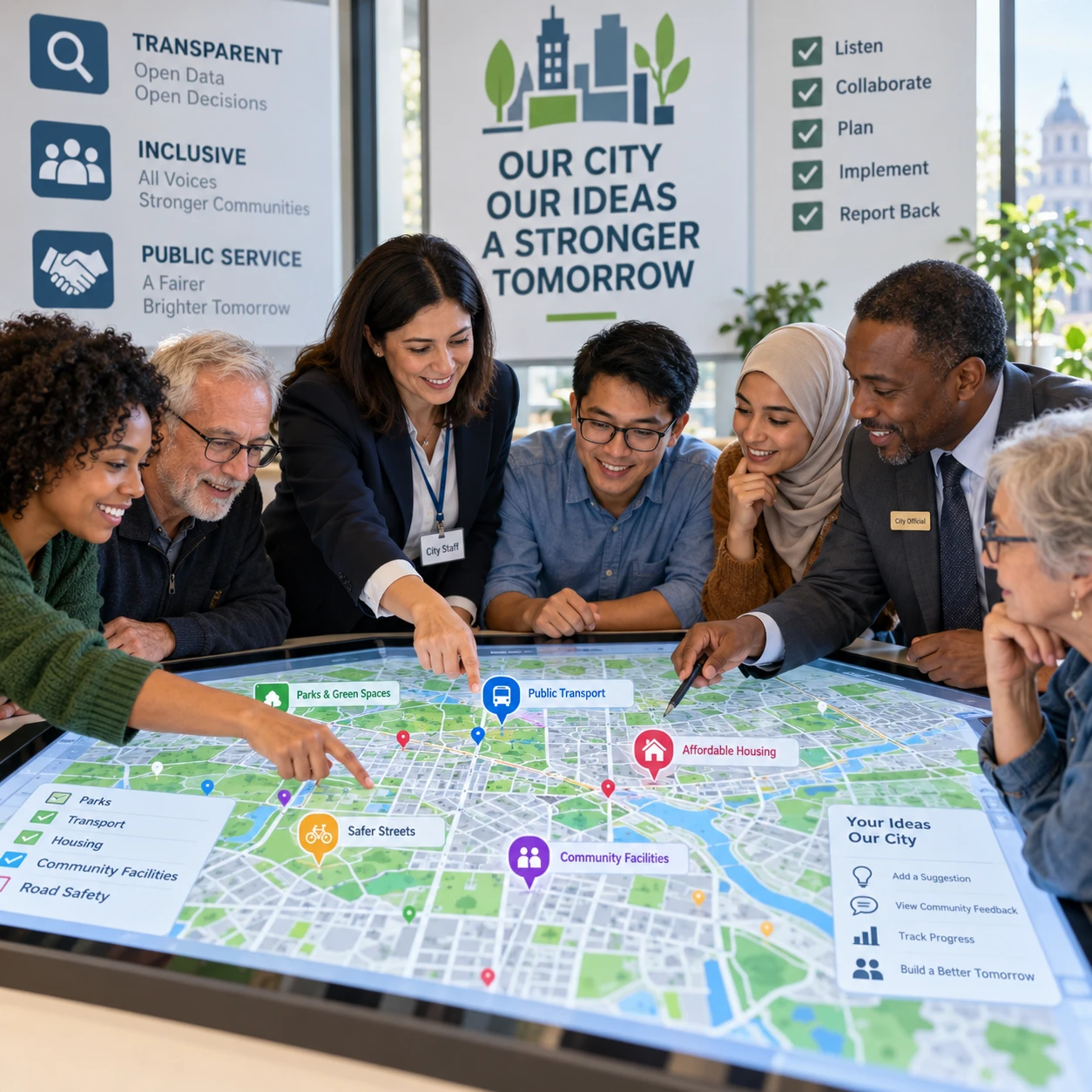
Digital public participation is changing. Governments once used online tools mainly to publish information or collect comments on proposed plans. Now, open government initiatives are exploring how residents can help define problems, design services, and shape policy choices from the start.
This shift from consultation to co-creation can make civic engagement more consequential, but technology alone cannot make it democratic. The process must include people who are often underrepresented, explain how decisions are made, and show what happened to public input.
What e-participation means in open government
E-participation is the use of digital channels to involve people in public decisions, services, and oversight. In open government, it connects civic engagement with access to information, transparency, and accountability.
These channels range from online budget consultations and petitions to participatory mapping, digital town halls, and platforms where residents can propose or refine ideas. Their purpose matters more than the software: a portal that gathers comments without explaining their role in a decision offers limited participation.
Open government provides the conditions for meaningful e-participation. Public information should be available in usable formats, decision-making rules should be clear, and officials should report how they considered contributions. The OECD’s work on open government describes a broader approach built around transparency, integrity, accountability, and stakeholder participation.
Digital channels can lower some barriers, such as travel or scheduling, and help agencies reach people across a large area. They can also exclude people without reliable internet, accessible devices, digital skills, or confidence that speaking up is safe. Online participation is therefore one part of an open government system, not a measure of whether the whole public has been heard.
From consultation to co-creation
Public consultation usually asks people to respond to a proposal; co-creation involves them in developing the problem definition and possible solutions. The difference is the level and timing of influence, not whether a process happens online.
In a typical consultation, officials have already drafted a policy, service, or plan, then invite feedback within a set period. This can be appropriate when a decision has a defined scope or government needs to test a specific proposal. But residents may have little say over the agenda or the options under consideration.
Co-creation starts earlier and continues through more stages. Participants might identify a service problem, compare possible responses, test a prototype, and review the final design. Public officials still have legal duties and may retain final decision-making authority. The process should make those boundaries clear before people invest their time.
Think of a city redesigning its permit application. A consultation might ask whether residents support a nearly finished online form. A co-creation process could invite applicants and staff to identify confusing steps, sketch alternatives, and test a revised service with people who have different access needs. Consultation is useful for focused feedback; co-creation is better suited to problems where lived experience can shape the options themselves.
What meaningful co-creation looks like
Meaningful co-creation gives residents, public officials, and other stakeholders defined opportunities to contribute across policy development or service design. Participants need enough information, time, and influence to make their role more than symbolic.
A practical process can follow four stages:
- Frame the issue: Publish the problem, relevant evidence, legal limits, and decisions that are still open.
- Generate options: Invite residents, community groups, frontline staff, and subject experts to propose or compare approaches.
- Test and refine: Use workshops, surveys, prototypes, or pilots to see how options work for different groups.
- Decide and review: Explain the selected approach, record how contributions informed it, and create a route to assess results.
Not every participant must join every stage. A resident may contribute through a short survey, while a community organization helps convene a workshop. What matters is that the process makes the stages, influence, and limits visible.
For example, when a public agency revises a benefits application, applicants can identify confusing language, caseworkers can flag operational constraints, and accessibility specialists can test screen-reader use. Their perspectives do not guarantee agreement. They can, however, reveal design problems that a review limited to policy staff might miss.
Digital tools—and the principles behind them
Digital participation platforms can support discussion, idea submission, surveys, participatory budgeting, collaborative drafting, and feedback on proposals. The right tool is the one that fits the decision and remains accessible to the people affected.
Start with the participation task, then choose technology. A survey can help gather structured views on a clearly defined question; a moderated discussion may be better for exploring trade-offs; a map can help residents identify location-specific concerns. No single platform does all of these well, and adding features can make a process harder to use.
Good design includes several practical safeguards:
- Accessibility: Follow recognized accessibility practices, support keyboard navigation and screen readers, and offer plain-language content. Provide translation or interpretation where community needs call for it.
- Inclusive outreach: Recruit beyond existing mailing lists. Work with trusted local organizations and provide phone, paper, or in-person options when digital access is limited.
- Clear process: State who can participate, how contributions will be used, when decisions are expected, and what is outside the process’s scope.
- Privacy and safety: Collect only necessary personal data, explain its use and retention, and set clear rules for moderation and harmful content.
These choices involve trade-offs. Identity checks may reduce duplicate submissions but create barriers or discourage people concerned about privacy. Open accounts may be easier to access but require thoughtful moderation. The agency should explain the rationale and risks rather than presenting a technical setting as neutral.
Making public input visible and consequential
Governments make public input consequential by documenting how contributions were assessed and explaining what changed, what did not, and why. This feedback loop is central to transparency and accountability.
At the outset, publish a short participation promise: what decision is open, who will review contributions, what criteria they will use, and when the public will hear back. Afterward, report the themes raised, the evidence considered, and the reasons for the decision. Where privacy permits, provide a searchable record of submissions or a representative summary.
A useful response format is a decision table with three columns: What participants said, How officials assessed it, and What action followed. For example, if residents report that a proposed transit stop is unsafe, the agency can say whether it changed the location, commissioned a safety review, or kept the plan and explain the evidence behind that choice.
Not every suggestion can be adopted. Budget limits, law, technical evidence, and competing public interests may rule out some proposals. A clear explanation is more credible than implying that every comment will determine the outcome. It also gives the public a way to assess whether officials followed the promised process.
Challenges and ways forward
E-participation faces recurring challenges: unequal access, low trust, unrepresentative participation, harmful or disruptive content, and limited institutional capacity. Governments can improve results by designing for these constraints before opening a platform.
A common mistake is treating the number of submissions as proof of broad representation. People who already follow government news or have more time may participate more often. Track who is missing, use targeted outreach, and combine online input with community meetings, phone access, or facilitated sessions. These methods take additional effort, but they provide a fuller view than a digital channel alone.
Another risk is inviting input when the decision is effectively settled. That can deepen distrust, especially if officials later cite legal or political limits that were never disclosed. Define the open questions at the start and say plainly what cannot change.
Moderation and staff capacity matter, too. Unclear rules can expose participants to harassment or leave harmful content unaddressed. Under-resourced teams may also struggle to synthesize thousands of comments. Publish moderation standards, assign responsible staff, and use transparent methods to group recurring themes while keeping a route to inspect the underlying evidence.
Finally, participation needs organizational commitment beyond a platform launch. Agencies should budget for outreach, accessibility, facilitation, analysis, and public reporting. A modest process with a clear purpose and a timely response can be more useful than a large portal that gathers ideas but leaves contributors uncertain about what happened.
Digital participation works best alongside in-person engagement and established democratic accountability. The future of e-participation depends less on adding technology than on sharing influence responsibly, making decisions legible, and showing the public how its contributions mattered.