How to Build a Civic Tech Community: A Step-by-Step Guide
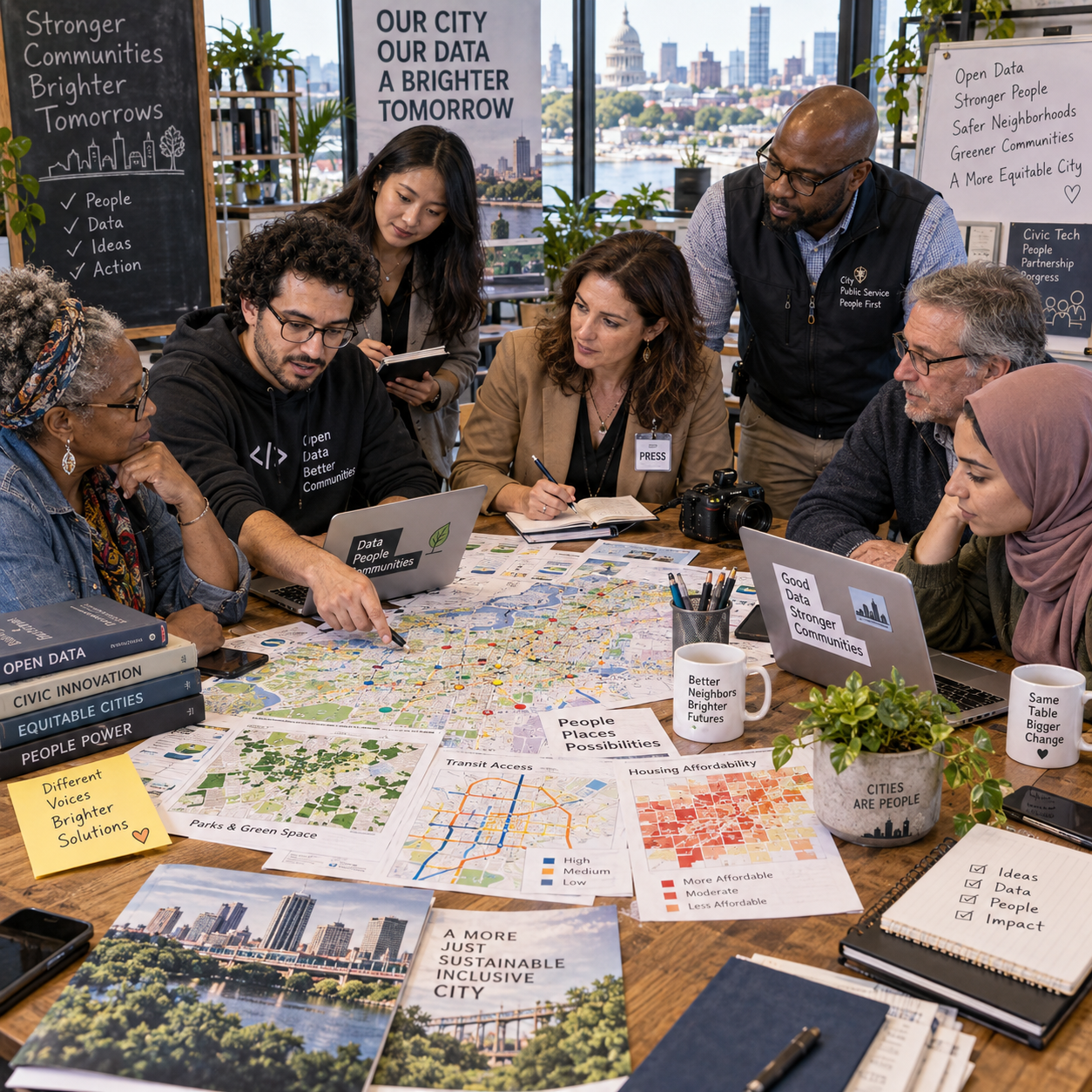
A civic tech community brings people together to use technology, public data, and community knowledge to improve civic participation and government transparency. Its strongest work starts with a local need, not a software idea. The steps below can help residents, technologists, journalists, advocates, and public servants form a group that builds trust and makes open government more useful in everyday life.
Define the community’s purpose and local needs
Define your civic tech community around a specific local challenge that open government and public information can help address. A clear purpose gives people a reason to participate and keeps the group focused on public value.
Start with listening, not a product brief. Ask residents what is hard to find, understand, or influence: How is a road repair prioritized? Where can people track a planning application? Are council decisions and spending documents published in formats people can use? These questions connect government transparency to daily experience.
Use community organizing methods to identify whose needs are missing from the conversation. Hold short listening sessions at familiar community venues, offer an online option, and speak with local service organizations that already have residents’ trust. Record the problem in plain language, who experiences it, and what evidence would show improvement.
- Need: Residents cannot tell when a proposed zoning change will be discussed.
- Possible civic response: Make existing hearing notices easier to find and explain how to submit a comment.
- Boundary: The project can improve access to information; it cannot guarantee a particular policy outcome.
That boundary matters. Civic technology can make participation easier, but technology alone cannot resolve unequal influence, poor service, or a government’s decision not to disclose information.
Bring together the right people
A civic tech community needs residents and local knowledge alongside technical skills. Invite people who understand the issue, the public institutions involved, and the barriers that keep others from participating.
A useful founding group might include residents affected by the issue, software developers or designers, journalists, open-government advocates, librarians, community organizers, and public servants. You do not need every role at the first meeting. You do need a way for people without technical backgrounds to shape the problem and judge whether a proposed tool is useful.
Make the invitation specific: name the local issue, say what participants will do, and explain what experience is welcome. Offer a short, facilitated session instead of assuming everyone can attend a long evening meeting. Share notes afterward, provide remote ways to contribute, and avoid making specialist vocabulary a condition of participation.
Accessibility is practical work. Choose a step-free meeting space where possible, provide materials in accessible digital formats, and ask participants about language, timing, childcare, or interpretation needs. Some supports require money and planning, so include them in the project budget rather than treating them as optional extras.
For a useful reference point, the Open Government Partnership describes open government through principles such as transparency, participation, and accountability. A local group can use those principles to ask whether its membership and project process give residents meaningful influence.
Build trust and agree on ways of working
Build trust by agreeing on how the group will make decisions, handle information, and share credit before it launches a project. Clear working principles help residents, technologists, and government partners collaborate without confusion about who controls the work.
Write a short agreement that covers transparency, accessibility, privacy, and accountability. It can state how meeting decisions are recorded, who can speak for the group, how conflicts are handled, and where code and project documentation will be shared. Revisit the agreement when the membership or project changes.
Open-source tools can help others inspect, reuse, and improve civic technology, but publishing code does not make a project automatically accessible, secure, or trustworthy. Choose an open license that fits the work, document limitations, and avoid collecting personal information unless there is a clear need and a responsible plan for protecting it.
- Publish decisions: Share agendas, notes, and action owners in a place residents can access.
- Explain data use: Identify what public data the project uses, where it came from, and what it cannot show.
- Protect participants: Do not expose private details or treat public datasets as harmless simply because they are publicly available.
Trust also means being honest when information is incomplete. Government records may be delayed, inconsistent, difficult to download, or unavailable. State these limits plainly instead of presenting a polished interface as proof that the underlying data is complete.
Choose a focused first project
Choose a first civic tech project that addresses a community priority, can be tested with available resources, and has a realistic path to use. A small, well-understood improvement is often more valuable than a large platform built before anyone has tested the need.
Use a simple three-part screen: priority, feasibility, and public benefit. First, confirm that residents want the project. Next, check whether the necessary public data, permissions, skills, and maintenance capacity exist. Finally, agree on the change you hope to see, such as fewer missed meeting notices or faster access to budget documents.
Possible first projects include a plain-language guide to finding public records, a searchable index of council agendas, or a map that links published infrastructure plans to their source documents. Before building, test a low-tech version: a spreadsheet, annotated webpage, or community workshop may reveal whether the idea solves the actual problem.
Public data needs checking before it becomes a tool. Confirm its source, update schedule, format, definitions, and gaps. If a dataset is incomplete or hard to interpret, document that fact and contact the relevant agency rather than filling gaps with guesses.
A focused project has trade-offs. A narrow scope can limit who benefits at first, while a broad tool can become too difficult to maintain. Set a review date and invite affected residents to say whether the project is useful before expanding it.
Collaborate with government and community partners
Collaborate with local government and community organizations by agreeing on clear contacts, requests, responsibilities, and feedback channels. Practical partnerships can improve access to public data and help a tool fit real civic processes.
Approach a relevant public servant with a concise explanation of the community’s finding, the data or clarification you need, and the public benefit of cooperation. Ask how records are maintained, when they are updated, and whether a published dataset has known limitations. A constructive request is easier to act on than a broad demand to “make government open.”
Partnerships should not make the community dependent on one official or give an agency control over resident priorities. Keep meeting notes and project decisions public, identify what each partner is responsible for, and preserve an independent way to report concerns. If an agency cannot share data, ask whether a public-records process, a different format, or a narrower request is possible; timelines and rules vary by jurisdiction.
Community organizations, local newsrooms, universities, libraries, and advocacy groups can contribute outreach, subject knowledge, research, meeting space, or feedback. They also bring their own capacity limits and priorities. Agree on expectations early, especially around data stewardship, publication, attribution, and ongoing maintenance.
Keep the partnership reciprocal: residents bring lived experience and scrutiny; public servants bring process knowledge and context. Neither contribution replaces the other.
Launch, learn, and sustain the work
Launch a civic tech project as a test, gather feedback from the people it is meant to serve, and track whether it improves access or participation. A visible release is only the beginning; maintenance and follow-up determine whether the work remains useful.
Before launch, check the project with residents who did not build it. Can they find the relevant information? Do they understand where it came from and how current it is? Can they use the tool with a phone, assistive technology, or limited bandwidth? Fix confusing steps and provide a non-digital route when the tool cannot serve everyone.
Choose a few measures that reflect the purpose, not just activity. Website visits can show reach, but they do not prove that residents understood a decision or influenced it. Depending on the project, track whether source documents are easier to locate, whether users can complete a task, or whether an agency corrected an unclear or outdated record.
- Publish what changed, what did not, and what remains uncertain.
- Ask users and partners for feedback at planned intervals, such as after the first month and again after a public decision cycle.
- Assign owners for hosting, data updates, accessibility fixes, and community questions.
- Keep documentation and code in a shared repository if appropriate, so others can maintain or adapt the work.
Sustainability depends on people and capacity as much as software. Rotate facilitation, welcome new contributors with clear starter tasks, and seek grants or institutional support without letting funding define the community’s priorities. If the group cannot maintain a tool, say so and plan a responsible handoff or shutdown. A transparent ending is better than a broken resource residents continue to rely on.
Frequently asked questions
Who should be part of a civic tech community?
Include residents affected by the issue, along with people who can contribute relevant technical, civic, journalistic, organizing, or public-service knowledge. Make sure decision-making is not limited to those who can code or attend every meeting.
How can a civic tech group work with local government?
Start with a specific, respectful request to the agency that owns the process or data. Agree on contacts and responsibilities, document conversations, and maintain independent community priorities and public reporting.
What makes a good first civic tech project?
A good first project responds to a resident-identified need, uses information the group can responsibly access, and has a manageable scope. Test the idea with people who would use it before committing to custom software.
How can a community keep participation inclusive and sustainable?
Offer multiple ways to participate, plan for accessibility and language needs, share decisions openly, and distribute work across contributors. Set aside time and resources for maintenance, not only the initial launch.